
23rd Septmeber 2026
Ahoy from our guides!
Onboard with Henley Spiers
Last week, we had the fantastic Henley Spiers on board, an award-winning photographer, adventurer and storyteller. Henley joined us as part of an expedition to capture the wildness of west Cornwall, alongside the spectacular fauna that call the waters surrounding this small peninsular home.
He said “In the second year of our collaboration on a Best of Cornwall itinerary, we witnessed bluefin tuna leaping out of the sea, common dolphins and, perhaps the star of the show, epic blue sharks. Once again, Jack’s seamanship and appetite for adventure meant we explored Cornish seas in a totally unique way”.
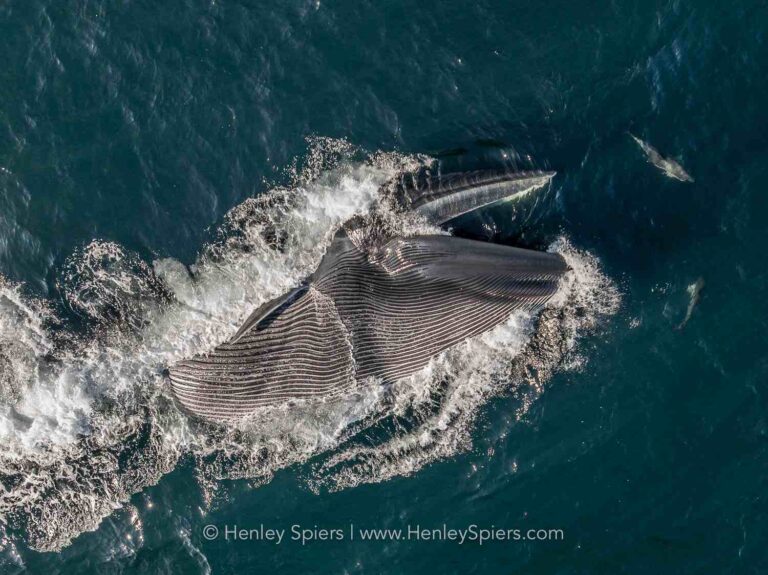
Having joined us back in September 2025, there’s a reason Henley was back this year for more. Last year he photographed three fin whales, the second largest animal on earth, feeding on bait balls of sprat, surfing the swell alongside common dolphins.
This year the focus of his photography expedition was a bit different. Sharks. Yep, those cartilaginous fish with sharp teeth that live in deep waters. There are over 40 species of shark that in live in UK waters, but this time Henley and the team were looking for just one, the blue shark. Growing up to 4 meters, blue sharks are torpedo shaped, slender and streamlined, with striking blue and silver counter-shading. This migratory species follows a clockwise route around the Atlantic, using the gulf stream to travel from the balmy waters of the Caribbean to the not-so-balmy waters of the UK.
To find the sharks, Captain Jack headed about 20 miles off the coast to a secret location, and after arriving, with just a small sliver of coastline in the distance, the first curious sharks appeared from the deep. Gearing up and entering the water with these animals, Henley and his team used their knowledge of the behaviour of these sharks, skill in the water and specific photography techniques to capture them in all their glory.
Capturing photos of these fantastic species is important, not only can it demonstrate that the negative stereotype of sharks is misplaced, but also puts a spotlight on a species that is increasingly threatened by human activity, particularly poor fishing practices. Blue sharks are listed by the IUCN near threatened, an early warning system for conservationists, indicating that with continued pressures its likely this species will become vulnerable to extinction.
The presence of these species in Cornish waters, is a good sign. These predators, high up on the food chain are crucial for trophic balance. They are one reason why the UK, particularly the south west, is an important area for marine biodiversity.
11th Septmeber 2026
Ahoy from our guides!
The turning of the seasons
As the summer season begins to wrap up, September brings fresh breezes, crashing waves and purple heather to the clifftops. Although the air may be cooler, the water remains relatively warm and, as ever, is bubbling with life.
While things may be beginning to quieten down on land, it is far from quiet at sea. Atlantic bluefin tuna patrol our waters in search of prey, waiting for shoals of garfish and other small fish to become concentrated by the powerful tides and swirling eddies around the Cornish coast. Common dolphins surf through the swell, while the Runnel Stone race surges past Gwennap Head, creating clean blue waves and fast-moving water.
Overhead, gannets gather from miles around, their arrival often one of the first signs that something exciting is happening beneath the surface. Huge shoals of baitfish can stretch along the peninsula, drawing in seabirds, dolphins and tuna and creating some of the most spectacular feeding activity we see all year. It’s no wonder this is one of our favourite times to be out on the water.
There is something magical about watching the seasons change at sea. On cooler mornings, when the air passes across the relatively warm water, a delicate veil of mist can sometimes form above the surface. Often known as sea smoke, it can transform an already dramatic coastline into something almost otherworldly. On days like these, it is easy to imagine where some of our old Cornish tales came from giants wandering the cliffs, pirates disappearing into hidden coves and mermaids concealed somewhere beneath the mist.
September also brings a different feel to the coastline. The bright bustle of midsummer begins to fade, the cliffs turn deeper shades of purple and gold, and the changing light gives Land’s End an altogether wilder character. Out at sea, however, the productive waters of late summer and early autumn continue to support an incredible abundance of wildlife.
For us, this changing of the seasons doesn’t signal the end of the excitement. If anything, it marks the beginning of one of the most dramatic periods on the Cornish coast when powerful tides, warm seas and abundant food can bring some unforgettable wildlife encounters.
So, while summer may be drawing to a close, there is still plenty happening beyond the harbour walls. Wrap up a little warmer, keep your eyes on the horizon, and come and experience autumn at sea with us.
16th August 2026
Ahoy from our guides!
Headlands and tides
If you’ve joined us on the water before, you might have noticed that some of our most exciting wildlife encounters happen around Cornwall’s biggest headlands. Land’s End, Cape Cornwall and Gwennap Head are already spectacular places to see from the sea, but beneath the surface there’s another reason we love exploring them so much. Headlands can be real hotspots for marine life!
But why?
It all comes down to tides, currents and food. As the tide moves around Cornwall, huge volumes of seawater are pushed past rocky headlands and through changes in the shape and depth of the seabed. Where these currents meet, water can become turbulent and mixed, creating the tidal races, swirling water and patches of choppy sea that we often experience around the Cornish coast.
While that might make for a slightly livelier ride on the boat, beneath the surface something really important is happening. This mixing can bring nutrients up through the water column and help concentrate plankton and other tiny organisms into particular areas. Small fish are attracted to this abundance of food and, as we’ve learnt over the last few weeks, where there are lots of little fish, the big guys are rarely far behind!
This is one of the reasons headlands can be such brilliant places to look for wildlife. Shoals of fish gathering around these productive waters can attract everything from diving gannets and shearwaters to common dolphins, porpoises, bluefin tuna and even whales. Sometimes we’ll arrive at a headland and seemingly all at once the sea comes alive, with birds circling overhead, dolphins feeding at the surface and splashes appearing in every direction.
The tides also mean that these hotspots are constantly changing. A headland that seems completely quiet at one point in the day can look very different a few hours later as the tide turns and currents begin moving in another direction. It’s one of the reasons no two Coast trips are ever quite the same, and why our skippers and guides are always watching the water, the birds and the tide for clues about where wildlife might be gathering.
So, next time we’re rounding Land’s End or passing Cape Cornwall and the water suddenly gets a little swirly, take a good look around. What feels like a bit of turbulence to us could be helping to create a whole feeding opportunity beneath the surface, and you never quite know who might turn up for dinner!
Captain Jack’s Sea State and Weather Report
Well, after another cracking spell of summer weather, things are looking a little more lively this week! Tuesday should give us some lovely bright spells once the morning clears, before the weather becomes a little more changeable as we head through the middle of the week.
Winds are looking fresher at times from Wednesday onwards, with a mixture of sunshine, cloud and the odd shower passing through. Nothing too unusual for a Cornish summer! As always, we’ll be watching the wind and swell closely and using the shelter offered by our two very different coastlines to find the best conditions on the day.
The tides are working nicely in our favour too. We’re heading down towards neaps as the week progresses, meaning a smaller tidal range and generally weaker tidal streams around our headlands. Perfect timing, as from Thursday, we’re hoping to stretch our legs a little further and get back around the corner!
It’s still early enough for the forecast to chop and change, so we’ll keep watching it closely, but there’s certainly plenty of opportunity for some fantastic days on the water. And with the amount of wildlife we’ve had around recently, I’m very excited to see what this week brings!
Looking Ahead with Kat
We’ve got a really exciting mix of trips coming up this week! On Tuesday and Wednesday we’ll be heading out from Penzance on our classic Land’s End adventures, exploring that spectacular stretch of coastline and, of course, keeping our eyes firmly on the water for all the wildlife that’s been keeping us very busy recently.
Then from Thursday, the tides begin to settle towards neaps and we’ll be stretching our legs a little further. Rounding Cornwall is back, along with our North Coast trips from Hayle, giving us the chance to explore both sides of the Cornish peninsula right through until Sunday.
And if you’ve been meaning to experience our North Coast trip this summer, this could be your last chance! Seal pupping season is fast approaching, and we’ll soon be giving some of our important seal sites a little extra space and quiet during this sensitive time of year. That means this weekend is likely to mark our final North Coast trips of the season.
So, whether you’ve got your sights set on Land’s End, fancy Rounding Cornwall, or want one last North Coast adventure before we say goodbye to that route for another season, there’s plenty to choose from this week. We can’t wait to have you aboard!
2nd August 2026
Ahoy from our guides!
Fin whales, tuna and rissos!
If you’ve joined us this week, you may have noticed there has been plenty of excitement above the water as well as below it! From enormous bluefin tuna launching themselves clear of the sea, to ocean sunfish unexpectedly leaping skywards, playful Risso’s dolphins surfing our bow wave and common dolphins working together to herd huge bait balls of fish, it has certainly been a week to remember.
While these displays might seem random at first glance, every behaviour has a purpose. Animals don’t waste energy, especially in the wild, so when we witness these spectacular moments, we’re often getting a fascinating glimpse into their daily lives.
We’ve also been lucky enough to witness sunfish putting on a show. Although they appear rather slow and clumsy as they drift near the surface, sunfish occasionally leap several metres into the air before crashing back into the sea. This behaviour is believed to help dislodge parasites, particularly after spending long periods basking near the surface where seabirds can also help by picking unwanted hitchhikers from their skin. This week Daisy said “I’ve seen sunfish lots here in Cornwall, but I’ve never witnessed them jumping like that before, I felt very lucky to have seen it so close!”.
Our Risso’s dolphins have also been in particularly playful spirits this week, surfing effortlessly alongside the boat. While it may look like they’re simply showing off, riding the pressure wave created by the bow actually allows dolphins to travel while using less energy. Of course, with such intelligent and social animals, there’s probably an element of fun involved too!
One of the week’s biggest highlights has been watching bluefin tuna launch themselves spectacularly clear of the water as they hunt garfish. Reaching incredible speeds, these powerful predators often burst from the surface in pursuit of their prey, with the momentum of the chase carrying them high into the air. Watching a fish weighing hundreds of kilograms breach against the backdrop of Cornwall’s coastline is a sight that never fails to leave us in awe.
Perhaps the most impressive behaviour of all has been watching common dolphins work together to herd shoals of fish into tightly packed bait balls. By surrounding the fish and forcing them into dense groups, the dolphins make it much easier for every member of the pod to feed. These incredible hunting events often attract seabirds such as gannets from above turning the sea into one giant wildlife spectacle.
As if the week couldn’t get any better, we rounded it off in spectacular fashion on Sunday with an unforgettable sighting further offshore, a fin whale and its calf. The world’s second-largest animal, capable of growing up to 27 metres in length, is an incredibly special species to encounter in Cornish waters, and to see a mother and calf travelling together made the experience even more remarkable. It was a truly fitting way to end what has been an amazing week on the water, and one that our crew and guests certainly won’t be forgetting any time soon.
Captain Jack’s sea state and weather report
After a fantastic run of settled weather, this week looks a little more mixed—but don’t let that put you off. We should still see plenty of sunshine, warm temperatures and some lovely spells on the water, with any showers looking fairly brief
We’re also moving through neap tides this week, so tidal streams will be a little gentler than they have been recently. That generally means easier conditions around headlands and a more relaxed day on the water, while still giving us plenty of opportunities to explore wherever the wildlife decides to show up.
As always, we’ll be keeping a close eye on the latest forecasts, but at the moment it’s shaping up to be another cracking week to get out on the water. With plenty of wildlife around and August now in full swing, here’s hoping the dolphins, tuna and maybe even another sunfish decide to put on a show for us!
Looking ahead with Kat
We’re kicking off the week with our spring tides schedule: Monday, Tuesday, and Wednesday running out of Penzance with Land’s End, Mount’s Bay, and Golden Hour trips. Fair warning though, these three days are almost fully booked. If you want one of the last remaining seats, get in quick.
From Thursday we’re back to our full schedule, running out of both Hayle and Penzance with Rounding Cornwall trips back on the water. Brilliant to be rounding the cape again!
And then the big one! This Saturday and Sunday we have our brand-new Bluefin Tuna Adventure running for the first time. This is a genuinely epic experience and something we’ve been so excited to bring to Coast Boat Trips. Don’t miss out, spaces will go fast.
26th July 2026
Ahoy from our guides!
Legends of west Cornwall
There’s something magical about spending time on Cornwall’s coastline. Perhaps it’s the towering granite cliffs disappearing into the sea mist, the hidden sea caves, or the wildlife that appears when you least expect it. It’s no surprise that for thousands of years these waters have inspired stories, myths and legends that continue to capture our imagination today. Long before GPS and weather forecasts, the sea was unpredictable and often dangerous. Strange sounds carried across the water, thick fog could appear without warning, and enormous creatures occasionally broke the surface. It’s easy to understand why generations of Cornish fishermen created tales to explain what they witnessed.
One of Cornwall’s most famous legends is that of the Mermaid of Zennor. According to local folklore, a mysterious woman with extraordinary beauty regularly attended church in Zennor village before eventually luring a young man out to sea, where she revealed her true identity as a mermaid. While we’ve yet to spot a mermaid on one of our trips, it’s easy to see how sightings of grey seals or even dolphins surfacing through the swell may have fuelled stories like these centuries ago.
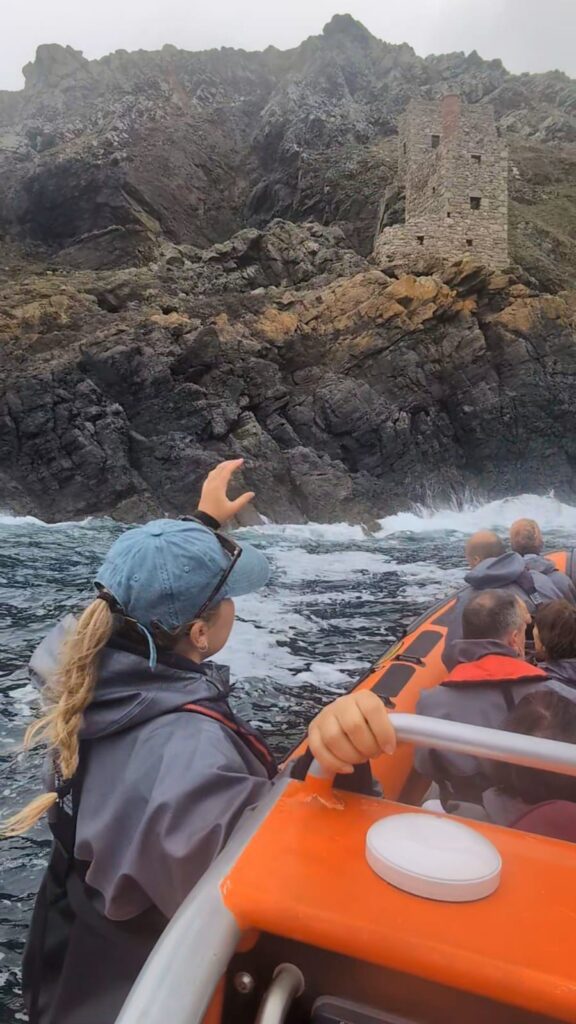
But of course, not all of Cornwall’s legends belong beneath the waves. High on the cliffs overlooking the sea, generations of miners believed in the Knockers, small, mischievous gnomelike spirits said to live deep within the tin and copper mines. According to local folklore, Knockers would tap on the rock walls to either warn miners of unstable ground or, depending on their mood, lead them astray in search of hidden tin lodes! Many miners would leave a small piece of their pasty behind as an offering, believing it would keep the Knockers on their side and bring them good fortune underground. Today, as we cruise past the iconic engine houses clinging to Cornwall’s rugged cliffs, it’s easy to imagine these little guardians still watching over the mines that helped shape Cornwall’s rich history.
The last to be mentioned, and perhaps Cornwall’s greatest legend is that of the Lost Land of Lyonesse, a mythical kingdom said to have once stretched between Land’s End and the Isles of Scilly. According to folklore, Lyonesse was a prosperous land of towns, forests and churches before it was swallowed by the sea in a single catastrophic night, leaving only one survivor to escape on horseback. While historians believe the story is legend rather than fact, science tells us that there is a fascinating link to reality. At the end of the last Ice Age, rising sea levels flooded vast areas of low-lying land around Britain’s coastline, gradually separating the Isles of Scilly from the mainland. Although Lyonesse itself may never have existed, the legend could have been inspired by real changes to Cornwall’s coastline witnessed by our distant ancestors.
Captain Jack’s sea state and weather report
Woah… for a second there I thought the summer holiday curse had arrived! Thankfully, it was only a weekend wobble. After the amazing run we’ve had, a Sunday morning battling the swell followed by a well-earned afternoon off wasn’t the end of the world.
The good news is it looks like we’re straight back into summer mode. From the start of the week, high pressure is building back in, bringing settled seas, sunshine and some cracking conditions. That gloomy weekend sky is clearing out to make way for another beautiful week on the water.
Looking ahead with Kat
We’re kicking off the week with trips departing from both Hayle and Penzance, with just a handful of seats remaining on our Rounding Cornwall adventures. If you’ve been thinking about joining us, now’s the time to book, as these spaces won’t be around for long.
From Wednesday, we move into our spring tides schedule, with departures from Penzance for our Land’s End, Mount’s Bay and Golden Hour trips. The forecast is looking fantastic for the south coast, with sunshine and settled conditions making it a brilliant week to get out on the water.
Looking ahead to August, we have two very special trips coming up. Our Bluefin Tuna Adventure offers the chance to witness one of the ocean’s most impressive fish in its natural environment, while on 12th August we’re running a Solar Eclipse Adventure, combining our popular Golden Hour trip with the unforgettable spectacle of a partial solar eclipse over Cornwall’s coastline. Both trips are already generating plenty of interest, so keep an eye on the website for more details and be sure to book early to avoid missing out.
19th July 2026
Ahoy from our guides!
Return of the bluefin
This week there’s been a real buzz amongst our crew as one of the Atlantic’s most spectacular predatory fish has once again returned to our Cornish waters. Every summer, for the last five or so years, around the end of July, Atlantic bluefin tuna have arrived off the coast of West Cornwall, and although we’ve come to expect their seasonal return, it’s no less exciting each year. Knowing these incredible fish are once again patrolling our coastline adds an extra layer of anticipation every time we head offshore.
Until relatively recently, sightings of Atlantic bluefin tuna around the UK had become very rare. Decades of overfishing throughout the Atlantic and Mediterranean caused populations to decline dramatically during the late twentieth century. Thanks to tighter international management, improved quotas and conservation measures, numbers have steadily recovered over the last decade, with west Cornwall now becoming one of the UK’s most reliable places to observe their seasonal return.
So why are they here?
Every summer, West Cornwall becomes an important feeding ground for bluefin tuna as large numbers of garfish and other bait fish gather in large shoals in our coastal waters. The garfish are long needle-like fish that form an important part of the tuna’s diet, and the abundance of this prey food makes our coastline an ideal place for these powerful hunters to feed before continuing their remarkable migrations.
Tuna are perfectly adapted for life on the move. Unlike most fish, they are partially warm-blooded, allowing them to keep their muscles warmer than the surrounding water. This gives them incredible speed, endurance and power, enabling them to undertake migrations of thousands of miles between spawning grounds in the Mediterranean and feeding areas throughout the North Atlantic. They can even reach speeds of over 40 miles per hour when pursuing prey!
As one of the largest predatory fish found in UK waters, bluefin tuna play an important role in maintaining healthy marine ecosystems. By feeding on fast-swimming fish such as garfish in huge quantities, they help maintain the balance of marine food webs and are a reminder of just how productive Cornwall’s seas can be.
Lauren, our new guide this year saw the tuna breaching for the first time this week! She said “This week I saw my first Atlantic bluefin tuna hunting at Lands’ End! It was amazing to see them up so close, I had heard how big they get but never expected to experience their sheer power! Just spectacular!”
Captain Jack’s sea state and weather report
What a week of beautiful conditions we’ve had! Although a spell of strong easterly winds meant we had to make a few adjustments to some of our trips, we’ve still been treated to plenty of sunshine and some fantastic days on the water. The good news is there’s more sunshine on the way this week!
Monday is shaping up to be the pick of the week, with glorious conditions before winds gradually build from the north-east. As the week progresses, they’ll back round to the north-west and could become a little fresher by mid-week. It’s still a little early for an exact forecast, but if the north coast becomes too lively, we’ll make the most of the shelter offered by Mount’s Bay. As always, we’ll be keeping a close eye on the conditions and choosing the best coastline for a safe and comfortable trip.
The north-easterly winds are actually good news for our Rounding Cornwall trips from Hayle to Penzance, so we’re hopeful we’ll be able to get those running on Monday and Tuesday before conditions become a little more changeable later in the week.
Looking ahead with Kat
With schools breaking up this week, we’re seeing bookings come in thick and fast — so if you’re planning to join us, please do book ahead as early as you can. There may still be the odd space popping up through the week, but don’t count on it!
It’s a great week on the water with a full mix of trips running — Godrevy, North Coast, Rounding Cornwall, Land’s End, and Mount’s Bay all on the schedule from both Hayle and Penzance.
One thing we’re noticing this week specifically — Hayle departures are going first. If a North Coast or Godrevy trip is on your list, jump on it sooner rather than later.
12th July 2026
Ahoy from our guides!
Super pods of dolphins
Wow. The last week has been a special one. With trips running on the north coast and the south coast, this week we have been treated to balmy waters, clear skies and of course lots and lots of spectacular wildlife. We had a few stand out trips this week, the first was a Rounding Cornwall trip headed from Penzance to Hayle and boy was it a goodun! Hundreds of common dolphins cruised alongside our rib (called the Guillemot), our guests were treated to an up close and personal view of these majestic mammals displaying their natural curiosity and playfulness.
It is well known that dolphins will come and cruise alongside marine vessels, but have you ever stopped to think about why they are so interactive? Well, there’s three elements to the answer, number 1) dolphins can save energy by travelling using the bow wave created at the front of a moving vessel, that means that they can expend more energy on other behaviours such as hunting and socialising. Number 2) When boats are stationary, they act as “fish aggregating devices” meaning fish shelter under the boat as a way of hiding from predators, but unfortunately for them, often become a dolphin’s dinner! And number 3) Dolphins have highly sophisticated brains, that means they likely experience playfulness, curiosity and social bonding in a similar way that humans do, so essentially, they are just having lots of fun!
That wasn’t the only special trip we had this week, on our North coast trip from Hayle to St Agnes we spotted our first Minke whale of the season! Minkes are one of our favourite megafaunal species to spot in west Cornwall, partly because they are so impressive and partly because they are much rarer to spot, so we’re lucky when we do! These whales are in the balaenoptera family meaning they have specialised baleen plates on their upper jaw which they use to filter small fish and krill from the water.
This week Zak said “Over the years working as guide for Coast, I have experienced many spectacular wildlife encounters, but there are some that stick with you for a very long time, this was unquestionably one of them. As we slowly and respectfully approached the huge feeding event, we saw up to six different seabird species, were treated to dolphins cooperatively hunting, and then finally a minke whale lunge feeding for its supper!”
Captain Jack’s sea state and weather report
As this high-pressure system tracks further north and a small low-pressure area develops to our south, we’ll get a strengthening easterly airflow pushing down the south coast. By Tuesday evening this should have blown itself out, leaving us with light winds and a settled sea state.
We often find that easterly winds quieten down the feeding of megafauna, but once they pass and winds track in from the west, the bay starts popping with activity. This past week has marked the first proper feeding events of the season — large bait balls, huge numbers of dolphins, porpoise, and minke whales. The season of bait ball feeding has been a little delayed this year, but man, it’s popping off now!
Looking ahead with Kat
This week we move into our spring tides schedule, which means we’ll be running exclusively out of Penzance on our two-hour Land’s End trip. No Hayle departures until Sunday 19th, when we’ll also be back rounding Cornwall again.
If you haven’t done the Land’s End trip before, it’s one of our best sellers for good reason — it covers some of the most dramatic coastline in Cornwall and takes in the waters where we get the majority of our wildlife sightings. A great week to join us.
We also have Golden Hour trips available on Monday, Thursday, and Saturday this week — these are always something a little special, so worth grabbing if you can make one of those dates work.
July 5th 2026
Ahoy from our guides!
Golden hour glory
If you’ve joined one of our Golden Hour trips, you may have noticed that the bay often seems to become even busier as the evening draws in. While the warm light and calm seas make for spectacular scenery, there’s also a fascinating ecological process taking place beneath the surface.
As daylight begins to fade, billions of tiny marine organisms start a journey known as diel vertical migration. During the day these small animals remain in deeper, darker water where they are less visible to predators. As the sun sets, they migrate upwards towards the surface to feed on microscopic algae under the cover of darkness.
This nightly movement forms the foundation of a feeding chain throughout the bay. Small fish follow zooplankton towards the surface, creating dense shoals that in turn attract larger predators including mackerel, seabirds, seals and, if we’re lucky, dolphins. It means that as the sun begins to set, the surface of the sea can become a hive of activity, with wildlife taking advantage of this temporary abundance of food.
One of the most exciting spectacles to witness is the teamwork between different species during these feeding events. Dolphins may work together to herd shoals of fish into tightly packed bait balls, making them easier to catch, while gannets and shearwaters gather overhead, diving into the same schools from above. These moments offer a wonderful reminder that every species, from microscopic plankton to top predators, plays an important role in maintaining the health of our marine ecosystems.
Our Golden Hour trips provide the perfect opportunity to experience this changing rhythm of the sea. Combined with calmer conditions, beautiful evening light and fewer boats on the water, it’s easy to see why this has become one of our favourite trips of the week.
This week Zak guided one of our Golden hour trip’s, “first golden hour trip of 2026, was certainly golden. We were treated to a beautiful sunset. After searching for a good while, we eventually found dolphins in the inner bay, cruising alongside our boat in the last moments of daylight. Stunning!”
Captain Jack’s weather report for the week ahead:
High pressure just parked right on top of us through the first half of the week. Drifting south west into the Bay of Biscay then back again — keeping the airflow west to north west the whole time.
Sunshine without getting stinking hot, slight breeze, calm seas. Yep. Perfect.
If I was prime minister I’d definitely get the kids out of school for this
Who’s coming out?
Kat’s top tips for the week ahead!
Peak Season is Here , Don’t Wait to Book!
Peak season has well and truly arrived, and we can feel it — trips are filling up fast and the booking flow has shifted up a gear.
With beautiful conditions on the water this week, we’re running our full range including Rounding Cornwall, Godrevy to Hell’s Mouth, North Coast and Land’s End — and seats are going quickly. If you’ve been thinking about it, now is the time to lock in your spot.
The good news? You’ve always got flexibility — if your plans change you can cancel or reschedule up to 48 hours before your trip, so there’s really no reason to wait.
Get in quick while the sun’s out and the seas are kind!
28th June 2026
Ahoy from our guides!
Heatwaves galore
Felt the heat last week? So did we at Coast Boat Trips! Last week the UK saw record breaking temperatures of up to 36 degrees! Lucky for us in Cornwall we were more than 8 degrees cooler than some other areas in the UK! But why..?
The location of our little peninsular is further from mainland Europe than the rest of the UK and we’re surrounded by the ocean, protecting us from the scorching sun! Did you know that the world’s oceans help to regulate air temperatures by absorbing massive amounts of atmospheric heat (up to 90%!) and slowly releases it over time?
While It’s too early to know what the effect of the heatwave will have on our marine life (there’s usually a lag time!), the long daylight hours have now peaked and our Cornish seas are teaming with life. This week saw the comeback of larger pods of common dolphin travelling hundreds of miles each year from the Bay of Biscay and elsewhere in the Atlantic. The dolphins are here to feed on bait fish that form tight shimmering shoals, and this week we have been lucky enough to watch huge pods work together to catch dinner!
We are also excited to be regularly seeing our Risso’s dolphins! One of our guide’s Lauren said “This week was an extra special one for me. After 2 months of working with coast, I finally encountered the infamous Risso’s dolphins that I have been hearing so much about! Slow in their initial approach, one or two revealed themselves at a time and then periodically disappear, but we were patient, trusting in our understanding of their behaviour. Before we knew it, we were surrounded and our patience was rewarded with a splendid display of the 3-metre long Risso’s launching themselves entirely out of the water!”.
Our veteran guide Zak also had a great week, “One of my highlights was looking up at botallack from the water as the foggy Cornish mist rolled amongst the engine houses. It looked very mystical! We also had a surprise viewing of a pair of puffins at cape Cornwall, a bird we usually only see in bad weather, not usually during a heatwave!”
Captain Jack’s weather report for the week ahead:
Looking ahead, the Azores High (a high-pressure system that hovers over the North Atlantc), is pushing north into the Bay of Biscay while a string of small low-pressure systems tracks to our northwest, bringing shifting winds backing from northwest to south and back again as each system passes. The high pressure looks to be keeping the low pressure far enough away for a largely sunny week with just the odd spell of changeable conditions.
This week we will see a consistent low-level groundswell from the West-North-West throughout the week and shifting winds plus large tides towards the end of the week will bring slight conditions. With access to both coastlines, we’re confident the week will shape up to be a comfortable on the water, especially for trips heading out this this weekend!
Keep an eye on your emails if you’re heading out with us! We work tirelessly to put you in the right place for whatever the day’s conditions bring, but all in all, a lovely week ahead!
Kat’s top tips for the week ahead!
It looks to be a good week ahead, here’s what’s running and where spaces are still available.
All week we’ll be running Land’s End trips out of Penzance, and the conditions are still looking great for getting out on the water just a little less sun until the weekend.
We’re running our first Golden Hour trip of the year this Thursday at 7pm, we’re so excited to be out on the water in the late evening again, it’s a brilliant time to see wildlife and the views are incredible!
Saturday we’re back rounding the full Cornish cape with our Rounding Cornwall trip, and the sunshine is returning too! Spaces are already filling up fast, so don’t leave it too late.